2009 වර්ෂයේදී ආරම්භ කල ශ්‍රී ලාංකීය වේදිකාව නම් මෙම වෙබ් අඩවිය, ලාංකීය කලා කෙත පෝෂණය කිරීමට ගත් කුඩා වෑයමකි. විශේෂයෙන්ම අන්තර්ජාලය තුල වේදිකා නාට්‍ය ගැන පලවූ ලිපි එකම වෙබ් අඩවියකට යොමුකොට, වේදිකා නාට්‍ය හදාරන සහ ඒ පිලිබදව උනන්දුවක් දක්වන සැමට පිටුවහලක් වන ලෙසට එය පවත්වාගෙන යනු ලැබීය.

2012 වර්ෂයේ සැප්තම්බර් මාසයේ www.srilankantheatre.net
නමින් අලුත් වෙබ් අඩවියක් ලෙස ස්ථාපනය කල මෙම වෙබ් අඩවිය, ලාංකීය කලා කෙත නව ආකාරයකින් හෙට දවසෙත් පෝෂණයේ කිරීමට සැදී පැහැදී සිටී. මෙම නව වෙබ් අඩවිය තුලින් වේදිකා නාට්‍ය පමණක් නොව, චිත්‍රපට, සංගීතය, ඡායරෑපකරණය, සාහිත්‍ය සහ තවත් නොයෙක් ලාංකීය කලා මාධ්‍යන් ගැන විශ්ලේෂනාත්මක ලිපි ඉදිරිපත්කිරීමට බලාපොරොත්තු වෙමු. ඒ සදහා ඔබගේ නොමසුරු සහයෝගය සහ දායකත්වය අප බලාපොරොත්තු වෙමු.

Sunday, 17 January 2010

Haththa: Painting the drama of the street

Author: Malinda Seneviratne
Source: Sunday Observer
Date : 1 November 2009


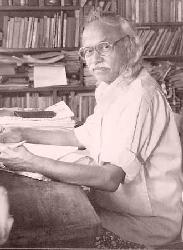
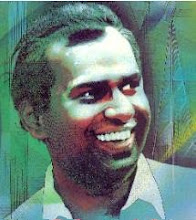
Prof. Gamini
Hattotuwegama

He is recognised as the father of modern street theatre in Sri Lanka. His students have moved from the street to the stage, from stage to television and some even to the silver screen. They owe much to Gamini Haththotuwegama, who, even after many decades of political theatre, does not seem to have moved at all. In his mid sixties now, the man remains in the street, metaphorically and literally.

He was maybe a couple of years senior to my parents at the Peradeniya University, and they called him “GK”. Some refer to him as “Hatha”, some as “Gamini” and others like myself, “Haththa”. My first recollection of this effervescent man goes back to at least thirty years. I had heard my grandmother complaining that “GK hadn’t returned some books he had borrowed”. They belonged to my late grandfather, who died before I was born.

So, a couple of years later, when he happened to visit us, I asked him, quite rudely actually, “where are seeya’s books?” He laughed quite heartily.

I can’t remember if I thought it was funny, even though I have known people to laugh with Haththa, not so much for the content of his jokes but his laugh itself.

It would have been about fifteen years later that I really got to know him.

I was in my second year at Peradeniya. This was just before the bheeshanaya was forced down our throats, although the signs of the impending tragedy were there for everyone to see. My friends, a group of around 25 people, had been “banned” from engaging in politics. It was quite fortuitous then that Haththa happened to be around, as a visiting lecturer in the English Department. He organised a street theatre workshop, which most of us joined not really realising at the point that it had great potential as a medium for political commentary. We ought to have known, however, because by the time Haththa would have logged almost twenty years of uninterrupted experimentation with the genre with great success.

The workshop snowballed into a production, “Sarasavi Kurutu Gee” (Campus Graffiti) which we played at the Sarachchandra Open Air Theatre, better known as the “wala”. If anything captured all the elements, the subtle nuances, the tragedies, the humour and hopes of what being a “student” at that time involved, it was this very deliberately rough collage of incidents, songs, skits put together by a group of around 30 students.

Haththa crafted this production with a series of exercises, seemingly unrelated but all touching on issues pertaining to the university student in a time of political turmoil. We all chipped in with ideas. We took popular songs and parodied them to suit the general temper of the “play”. We made fun of our teachers, the university administration, the government and of course ourselves.

Perhaps what was most educational in the entire process was that we realised that everyone could be an actor. Well, to be more honest, that we all act, all wear masks and therefore “acting” is not something that has to be learnt, but a human trait that is in all of us waiting to be recognised and exploited. Hopefully for beneficial purposes. I am sure that if not for Haththa, Chandraratne Bandara, Priyantha Wickramasinghe and Upul Kaluhetti, among others, would never have dreamed that they had the potential to become excellent actors. We wouldn’t have known either.

Haththa, to my knowledge, had a problem getting a master’s degree. His argument was that there was no one competent to supervise his thesis. That may have been true, but I believe the real reason was that he found it boring to write about what he did - theatre. Being a non-conformist in many ways, Haththa might have found the task of satisfying some departmental requirement too much to take. He had to pay for this intransigence, of course. For too long, he has had to depend on the good heart of department heads for visiting lecturer appointments.

He is a character. A legend, in fact. He had a carefully developed reputation as a man who paid scant attention to physical hygiene, although I am sure he would deny this. During those turbulent years, Haththa often stayed at Marcus Fernando Hall, as the guest of the then Subwarden, Navaratne Bandara. Navaratne once told me, “can’t you tell your sir to at least wash his clothes?” He was smiling when he said this. I am sure it was said in jest. But Haththa’s “haduness” was legendary. I distinctly remember him making quite a cogent argument for non-bathing. He said, “It’s not good to take a bath on the morning of the play, because it could have an impact on your voice. Actually a bath on the previous night might not be a good idea either. Come to think of it, bathing definitely involves the risk of ruining your voice, and the smallest impact might ruin the production.” His guffaws as he meditated thus, were reminiscent of his laugh when he adroitly brushed aside my complaint about the non-returning of borrowed books. In the year 1990, he had to cancel a performance of the Sinhala version of Hamlet at the Sri Jayewardenepura University because he lost his voice. Maybe he had taken a shower, I don’t know.

And yet, unlike most “legends”, Haththa remains one of the most easy going, easily accessed personalities around. I remember him as a man so generous with his time and his knowledge, that he would forget that although theatre was life to him, it was not exactly seen in those dimensions by all his students. His rehearsals would take up entire days. They were at times preceded by a couple of hours by Haththa’s yarns and he had hundreds to relate. Some he would repeat, forgetting that we had heard it all before.

All part of the personality, I believe. Easily forgiven, for he was not only respected but loved too. “Haththa pehedilivama kollek” (Haththa is most definitely a boy). He was and still is I believe, ageless. A wise old man, a teacher, a young man at times as fervent about “revolution” as an undergraduate, and a baby too.

I remember him as an adoring father. His two children, Rajiv and Chamindu, who were fully fledged members of the drama group at Peradeniya even though they were in their early teens, were loved by all of us. Haththa loved singing the immortal theme song, if one may call it, of Sinhabahu. He would launch into “gal lena bindala” at the slightest provocation. I have seen many versions of Sinhabahu over the years, but have never encountered such a powerful and passionate rendering of this song. It has to do with his children and particular circumstances which I do not intend to go into here.

Haththa knows, I am sure. So do we all.

I do know that there are people who see Haththa as just a “street theatre” person. He is much more than that. His knowledge of theatre goes beyond being familiar with one of its many forms. He is an expert on world theatre and someone who can creative fuse the many forms and themes that he encounters. There are others who would be more competent to write about these things. For me, Haththa is an effervescent character, a one of a kind, full of idiosyncrasies, full of vigour, full of hope for the future. I was never fully convinced of the logic of political positions he advocated. I do know however that he has not willingly harmed or wished harm on anyone.

“One day I fell asleep in a Horana bound bus. I got up somewhere close to Horana yelling, ‘budu thaaththe maava beraganna’ (Father, save me). The bus was almost empty and most of the people knew me. If I had been a ten year old, it wouldn’t have been strange. But here I was, a fifty plus man, yelling out to my father!” We all burst into laughter when he related this story.

A man who can laugh at himself is half way towards enlightenment, I believe.

I shall not comment on the other half. I don’t need to, for we live in a world where 99% of those who profess a love for humanity are just play-acting. In Haththa’s case, theatre is a heart that he embraces and acting is the way he pumps this heart so that its message of love and love for the collective effort is sent along all the arteries that feed hope in hungry people.

We need more of his tribe both on the street and out of it, if only because of all the histories, violence, oppression and resistance that are embedded and in fact make up what is so casually and un-politically referred to as “the street”. This street, we must not forget, is not found only in the teeming metropolis. It is in every village, every factory, every school, police station, army camp and even the jail. He has my salute, this man who has never been dazzled by the glitter of the lush avenues. He has my salute, for what it is worth.

Dr. Gamini Haththotuwegama, widely recognized as the father of street theatre in Sri Lanka, and versatile and indeed omnipresent personality in the arts, passed away in the early hours of Friday, October 30, after a long battle with cancer. He was 73 years old. Dr. Haththotuwegama taught both in the formal academic institutions (University of Peradeniya and Kelaniya University) as well in informal settings through innumerable drama workshops. The beneficiaries of his teaching largesse have gone on to become experts and stars in their own right, on stage and on screen. He is survived by his son Rajith and daughter Chamindu. His mortal remains will be moved to the Kala Bhavana for the public to pay their last respect from 10.00 am onwards on November 1. The funeral will take place at 4.30 pm the same day at the General Cemetery, Borella.

Courtesy:http://www.srilankaguardian.org/2008/04/haththa-painting-drama-of-street.html

(This was written in April 2008 by Malinda Seneviratne)

Creator of Quality Children's Entertainment

Author : Asha Senevirathne Source : Sunday Observer Date : 16 November 2008

Throughout history, an innumerable (uncountable) number of literary and artistic creations have been bestowed on us in the form of dramas, songs, films, books......

However, only a handful of these creations have been aimed at children who are considered as the future of the country, requiring proper nurturing and guidance through high quality artistic material.

When we consider the aesthetic sector in Sri Lanka, we come across a veteran dramatist who has produced quality material for children as well as adults. She has done a lot in the area of children’s theatre; perhaps some of the best dramas for children may have been presented by her.

She is none other than Somalatha Subasinghe, who gave local audiences such delightful creations as ‘Thoppi Velenda’, ‘Punchi Apata Then Therei’, and ‘Ranmalee’.

‘Muhudu pathula
yata indala
Muthu etayaka nidi
karala
Pena katiyaka pa karala
Mage dothata puthu
awa......’

Some of you little kids may not be familiar with this song, but it was quite a famous song in the drama ‘Mudu Putthu’ by Gunesena Galappaththi. This was a drama in which Subasinghe had taken part, early in her stage career.

She not only acted in the play, but sang her own songs. There, her acting, melodious voice and rhythm all combined towards an outstanding performance which delighted her audience.

Her stage career began while she was still a student of Musaeus College, Colombo. In the University, her abilities were polished by Dr. Ediriweera Sarachchandra. She proved her ability and talents to the world by acting the only female character in the drama ‘Raththaran’.

Her stage acting abilities were honed further with a lot of memorable characters like ‘Diriya Mava’, the Sinhala translation of ‘Mother Courage’ by Henry Jayasena, ‘Liyathambara’ by Ranjith Dharmakeerthi and ‘Vesmuhunu’ by Dhamma Jagoda among a host of others. She has taken part in Sinhala films as well; most will not forget the characters she played in ‘Viragaya’ and ‘Mahagedara’.

As a dramatist for children, she has made a vast contribution for their benefit. It is not easy to speak to children, but her dramas for children were focused on providing moral lessons through simple stories.

She has successfully attempted to reach and address children from the grassroots level. Her productions have been greatly influenced by veteran Sri Lankan dramatists like Dr. Sarachchandra as well as foreign masters such as Bertolt Brecht.

She says, “Artistes in any field should be committed to promoting social justice and conscience. Although the world is changing, good morals and principles need to be taught to the children.”

She had been striving to develop the talents of children through the Lanka Children’s and Youth Theatre Organisation (LCYTO), a voluntary organisation she founded in 1981. According to her, every child should be happy. Besides food and shelter, theatre and other quality entertainment play an important role in their lives by teaching them many lessons.

The famous veteran dramatist for children, Subasinghe says that adults have a big responsibility when it comes to creating a world which is suitable for children.

“They have to educate children, so that they would cooperate with each other in society and get the strength to live because the child gets everything from his/her atmosphere. When a child is small, he/she is very nice and receives a lot of special attention and treatment. But, later, the adults give up on the child due to many reasons.

We forget that children do what they see, hear, and observe in society. Therefore, society has a responsibility in making a good generation of children without inculcating bad values and morals, and also anger, hatred and jealousy in them.”

She further says, “The child is not an adult, but he/she has his/her own mental and physical needs. Therefore, what we give him/her should be necessary and applicable to him/her. In short, what we give a child should be digested by him/her. If not, the child’s mental and physical system will be damaged.”

Her family atmosphere had greatly helped and influenced her to look at problems with an open mind. Coming from a family of teachers, she also went on to become a teacher. Not content to settle for that, she went on to introduce a new look to the theatre. The awards she has won in many different areas such as acting, directing and production are too numerous to mention.

In a way, we can describe Somalatha Subasinghe as a radical character on and off the stage. She practises what she believes in, and this, as we all know, is not an easy trait to come by.

Children’s theatre

Punchi Apata Then Therei
Thoppi Welenda
Gamarala Diviyalokayata
Ranmalee
Ottooi
Hima Kumariya
Walas Pawla

Stage dramas with her participation

Vikurthi
Para Haraha
Sanda Kinduru
Mudu Putthu
Pawara Nuwarak
Opera Wanyosi of Wole Soyinka
The trial of Dedan Kimathi
Yadam
Antigone
Mavakage Sangramaya

Pix: Priyantha Hettige

Thursday, 14 January 2010

The Curtain falls on an era

Author: Ajith Samaranayake
Source : Sunday Observer

Date:03/Nov/2002


Sugathapala de Silva with SLRC Chairman M.J. Perera at the Navayugaya awards ceremony in 1987.

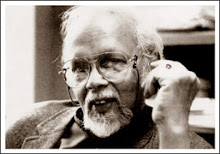
The death of Sugathapala de Silva last Monday at the age of 74 after a long illness evokes a sense of epochal loss. For if Ediriweera Sarachchandra gave the Sinhala theatre a local habitation and a name by taking it to its roots in folk drama Sugath as everybody knew him, accomplished the next task of bringing the new theatre to the audiences of the 1960's. It has been said of the Russian novel that it emerged from Nikolai Gogol's 'Great Coat.' In the same sense all serious Sinhala drama of today has emerged from Sugathadasa de Silva's womb although he may not have fathered them himself.

Dissatisfied with his own translations and adaptations of the plays of Moliere, Gogol and Chekhov (done in collaboration with E.F.C. Ludowyke and A.P. Gunaratne) Sarachchandra after studying the Japanese folk theatre turned to our own nadagam, kolam and sokari plays and the thovil ceremonies to seek the roots of an indigenous theatre which would evoke a resonance from the soul of a people only recently liberated from the imperial yoke. The fruit of this labour was, of course, 'Maname' his refined adaptation to the stage of the original nadagama as enacted by Charles Silva Gunasinghe Gurunnanse of Balapitiya.


The ‘Loveable Dictator’ as Sugath sought to describe the role of the director in the theatre.

He reached the apogee of these labours with 'Sinhabahu', his own play where with skilful stylised movements, memorable poetry and haunting music he was able to narrate the story of the origin of the Sinhala race and suggest through it a contemporaneous generational gap. But by the early 1960's the stylised form had spawned mindless imitators who had made a caricature of Sarachchandra's mode. What is more, there was the feeling that the mode had exhausted itself and it was this new thinking which Sugath's generation represented. This was a generation of bi-lingual youth either of urban origin or who had come to Colombo in search of the pot of gold at the foot of the rainbow. They were a middle class generation working in newspapers or the advertising industry.

They were also excited by the new trends in English literature, drama and the cinema. Most of them were grouped round the 'Sinhala Jathiya' paper (published by Gilbert Perera of the Perera and Sons family) and the magazine 'Dina Dina' edited by Anandatissa de Alwis. The late Cyril B. Perera recalls in a tribute to Neil I. Perera how of a Sunday, Neil would somehow find the money to watch a film with a couple of friends to the accompaniment of a few bottles of beer, a packet of kaju and a packet of Bristol cigarettes! Basically outsiders to the Big City these young men would chase the sun down into the sea with their conversation which centred on bringing about an awakening in the arts.

It was out of these conversations that the idea of forming 'Apey Kattiya' emerged. Established as a loose artistic grouping at the now extinct Indian Club in Kollupitiya it took the Sinhala theatre by storm with such plays as 'Boarding Karayo' and 'Thattu Geval.' But it was not confined to drama alone. Sugath himself brought out several novels during this time such as 'Asuru Nikaya' and 'Biththi Hathara' later made into a film by Parakrama de Silva.

Sugath was no doubt inspired by dramatists such as Tennesse Williams and Pirandello translating or adapting successively their 'Cat On a Hot Tin Roof' and 'Six Characters in Search of an Author' but there was no doubt that he was a natural dramatist wishing to break through the mould of the proscenium arch. Technique which he used at the time such as a character running up on stage through the audience were revolutionary for their times and was like a whirlwind blowing through the claustrophobic corridors of the Sinhala theatre as well as ossified middle-class manners and morals.

This was a personification of the aspirations, satisfactions and frustrations of a new urbanised generation which was burgeoning in the 1960's.

But if in the 1960's Sugath expressed an existentialist sense of alienation, by the 1970's he had become a more overt politically inclined dramatist and writer. By this I do not mean that he ever waved a party flag or fell victim to the wave of socialist realism which swept the arts sometimes in deference to the new United Front regime led by Prime Minister Sirimavo Bandaranaike in 1970. Sugath was too percipient a writer for that. In fact there is no other artist in Sri Lanka (With the exception perhaps of Gunadasa Kapuge) who has been so battered by the bludgeon of blind political power as Sugath. However Sugathapala de Silva never fell into the intellectual error of confusing personal political convictions (which he firmly held) with partisan party politics.

His best play will perhaps remain 'Dunna Dunu Gamuwe' which was made in the aftermath of the 1971 Insurrection. Although centred on a trade union struggle (which might have looked like small beer to the brave insurrectionists) it had an admixture of politics and art expertly mixed with technique and aided by some superb acting by the late U. Ariyawimal and W. Jayasiri was the percussor of the serious political theatre which followed at the end of the decade.

In that sense Sugathapala de Silva will remain the one bridge which brought together the realistic theatre of the 1960's with the absurdist theatre of the 1970's and the post-modernist theatre which followed. Whether it is Simon Navagaththegama, Parakrama Niriella, Dharmasiri Bandaranayake or the latest star Rajitha Dissanayake all of them owe their origins to Sugath. Some may have followed his politics and others his techniques and some a mixture of both but the debt is beyond doubt and will certainly not be challenged.

Born in Nawalapitiya, the son of a small trader, Sugath grew up in that peculiar milieu of small town commerce with its mix of Sinhala, Tamil and Muslim traders. He has portrayed these experiences of Colombo and Nawalapitiya in different ways in the novels 'Ballo Bath Kathi,' 'Ikbithi Siyalloma Sathutin Jeevathvuha' and 'Esewenam Minisune Me Asaw' which were peculiar political novels in their own ways. Here we see the agonies and ecstasies of a newly-arrived class, their gradual evolution into a national bourgeoisie and finally their bid to challenge and even dialodge the old comprador class. As a political novelist Sugath was no propagandist and was too subtle a writer to make overt political statements but all his work is shot through with his sense of immense humanism and his hope for a better society for the wretched of the Sri Lankan earth.

A self-made man Sugath was widely read and belonged to a class of self-reliant and self-supporting artistes who are now extinct in the country.

Even though politically battered, economically derelict and at times his family itself scattered he never gave up hope or went behind the patronage of politicians. Even though bed-ridden for the last several years he did important translations the last being Shyam Selvadurai's 'Funny Boy' which was released only last month.

This showed his readiness to keep up with the young and the latest in literature and ideas even in the seventh decade of a crowded life.

Sugath worked for long at the Sri Lanka Broadcasting Corporation as a producer and in the late 1960's was in charge of the weekly radio drama and the weekly short story programs which were the first stamping grounds of writers and dramatists who are today well-known in their own right. But he himself led no school or cult and 'Apey Kattiya' was a loose democratic organisation with no formal structure although he was certainly its undisputed leader or the 'Loveable Dictator' as he sought to describe the role of the director in the theatre.

In both the theatre and literature Sugath can be seen as an early percussor of post-modernism, a much abused term today. One of his earliest novels 'Asura Nikaya' was a depiction of the silver screen of the 1950's and 1960's when stars were worshipped as gods and goddesses. 'Biththi Hathara' was about the aimless life of a philandering young man adrift in the heartless city. In 'Hitler Ella Marai' he re-created the life of Adolph Hitler in his own idiosyncratic manner.

Sugathapala de Silva was almost the last of a generation. This was a time when Government servants like Henry Jayasena, S. Karunaratne, Sugathapala Senarath Yapa, R.R. Samarakone, Sandun Wijesiri and Dharmasiri Bandaranayake (to name only a few which presently come to mind) were active in the theatre and the cinema although receiving no duty leave for these cultural activities.

The cost of living was reasonable and a middle-class family could go to the theatre or the cinema without much strain on the family budget. Buses ran late into the night so that they could go back home. The Lumbini and the Lionel Wendt theatre were hives of activity before the Centre could not hold any more.

Today, however, we live in the electronic age which some call progress but where much of the decencies of life have been lost. Sugath himself was a victim of this decay and death of decency but watched it all with a philosophic detachment from his sick-bed in a ground floor Moratuwa Soysapura scheme flat.

Many of the luminaries of 'Apey Kattiya' such as Cyril B. Perera, Neil I. Perera, Augustus Vinayagaratnam and G.W. Surendra went before him. He follows them bringing down the curtain not only on a full and chequered life but also a cultural era in our troubled country.

Of theatre and gangsterism

Author: Indeewara Thilakarathne
Source: Sunday Observer
Date: 23/Aug/2009


Although the beginning of theatre can be traced back to the very beginning of the civilisation, the origin of folk theatre and dramatics can be traced to the ritualism of Vedic people of the second millennium BC. The rudiment of folk theatre consisted of dance, food, ritualism and depiction of events of the daily life. It was this depiction of events of the daily life which subsequently led to the birth of classical theatre.

Like the Peotics of Aristotle, it is the Natya Shastra of Bharata Muni which greatly influenced the Asian theatre. It was Natya Shastra which for the first time laid a firm technical foundation for drama. Extremely wide in scope, Natya Shastra describes in minutest details not only the precepts for the playwrights and actors but also ten types of drama, principles for stage design, make up, costume dance ( diverse movements and gestures) and a theory of aesthetics (Sasas and bhavas).

According to Bharata Muni, bhavas are the emulation of emotions that actors perform while the rasas (emotional responses) are those that inspire the audience. He lays down eight principle rasas; love, pity, anger, disgust, heroism, awe, terror and comedy. He points out that a play should be made up of diverse rasas but a principle rasa should dominate the play and all modes of expressions of an actor such as speech, gestures, movements and intonations should be used in a play.

However, the epics that first emerged from India were The Ramayana and Mahabharata which inspired generations of playwrights and still influence the work of art. Noh, Bunraku and Kabuki make up of Japanese theatre. Modern European theatre was dominated by realism. However, subsequently the tradition of realism was challenged and young dramatists experimented with theatre leading to the birth of host of new traditions such as epic theatre, absurdist theatre, and postmodern theatre. The landscape of twentieth century theatre was dominated by aesthetic movements such as Naturalism, Realism, Dadaism, Expressionism, Surrealism, Absurdism, Postmodernism as well as principal playwrights including Luigi Pirandello, Bertolt Brecht, Antonin Artaud, Konstantin Stanislavski, Harold Pinter, Eugene O'Neill, Samuel Beckett, Dario Fo and Tony Kushner.

Sri Lankan theatre

Early Sri Lankan theatre was greatly influenced by Indian theatre and drama.

Nadagam, a form of folk dance from India can be considered as the rudimentary form of Sinhala theatre. The next important phase of Sinhala theatre was the Tower Hall era which was dominated by early form of Sinhala drama referred to as 'nurthi'. The principal dramatists who dominated the landscape of theatre at the time were C. Don Bastian, W. John Perera, E.Y Perera, D. Bartholamus and John de Silva. Though John de Silva came into the scene much later, he virtually dominated the era.

However, it was Prof. Ediriweera Sarachchandra who converted rudimentary form of Nadagam into Proscenium stage with his seminal productions Maname and Singha Bahu. Prof. Sarachchandra, who was a scholar of international repute, was not only influenced by Western Classical theatre but also by Japanese traditional drama such as Noh and Kabuki. It was in 1959 with the regime change that Sarachchandra made Maname.

Maname and Sinha Bahu marked a watershed in Sinhala theatre. They are not only masterpieces in theatre but also prominent in the use of refined language, local idiom and techniques of theatre. For the first time, English medium theatre critics of the time, acknowledged the higher quality of the production.

One of the prominent characteristics of Sinhala theatre, from its very inception, was that the productions were influenced by the socio-cultural dynamics and the milieu in which the dramatists lived. While John de Silva's plays were intended to instil patriotism in the population, Sugathapala de Silva's plays were critical of the establishment. Sugathapala de Silva was greatly influenced by ideology of the leftist politics in general and Marxism in particular.

Sri Lankan tradition of ballet, though grew outside the mainstream theatre, has been moulded under the larger-than-life shadow of Chitrasena. It was the seminal productions of Chitrasena such as Nala Damayanthi and Karadiya which formed the anatomy of Sri Lankan ballet. The Chitrasena School which Chitrasena and his wife Vajira founded has produced generation of theatre personalities such as Ravibandu Vidyapathi and Channa Wijewardene. Perhaps, the singular contribution of Chitrasena to Sri Lankan theatre and drama was the adaptation of dying traditions such as Up Country, Low Country and Sabaragamuwa dance into proscenium stage and thereby preserving the corpus of indigenous knowledge associated with these traditions.

Gangsterism in theatre

With the socio-cultural transformation from feudalism to capitalism, the economic base for lineage-based school of tradition such as Garanas (generation of teachers by lineage) and traditional teachers of dance was eroded to a greater extent.

India which is home to a divergent group of such traditions and Garanas, has absorbed effectively the traditional form of art into its flourishing system of university. One of the benefits of institutionalisation of lineage-based schools of traditions is that the ability to tap a vast pool of talents from diverse parts of the country. It is an undeniable fact that informal sector, such as so-called academies of dancing have ganged up to project themselves as the saviours of traditions while distorting the image of the university. For instance, some theatre personalities, beyond doubt they are talented, are refusing even to visit the university, have sought media sponsorship from cheap media institutions for their performances.

The attitudes of some of the theatre personalities are anachronistic and out of touch with the reality. For instance, how can one be cultured if one serves one's teacher with a plastic cup of inferior quality while serving themselves with porcelain cups. The act smacks of class prejudices and is in the first place inhuman.

Gangsterism has denied stage for university graduates to perform. These so-called academies of dancing have virtually denied access of cultural units of diverse countries based in Colombo to university by tarnishing the name of the university.

Though there is absolutely nothing wrong in sponsoring academies of dancing, if the cultural unities intend recognising talents and tapping the growing talent base in universities, it is imperative to sponsor and aid the activities of the universities.

Ape kattiya dared to differ


Author: Madhubhashini Disanayak
Source : The Sunday Times

YoungThe young Sugathapala de Silva
In an article published two years ago in the drama magazine 'Preksha', Simon Navgattegama speaks of a group of young players who had made a major contribution to drama in our society - the group 'Ape Kattiya' (Our Group). He concludes:

The change that occurred during the fifties and sixties in the Sinhala stage can still be seen in a mature form today. The change that Navagattegama speaks about is the portrayal of social problems on stage - the bringing in of social realism on to the field of drama that had been swept away into the form of stylized drama with its plots taken from myths and legends, distant in time and space, with the success of Sarachchandra's 'Maname' in 1956.

Though it is hard to agree with the belief that the universal themes that stylized drama usually dealt with had no relevance to the present, there did exist a criticism (and still does, as apparent in the article 'Hitting at Maname' in The Sunday Times of 16 February 1997) that the form that took the country by storm did not deal with the problems that affected its people.

Navagattegama speaks of the challenge of producing realistic drama in the fifties when the powerful "Peradeniya School" was propagating the stylized form which they considered to be closer to our traditional roots. '"Luckily for modern Sinhala drama, Ape Kattiya was stubborn enough to follow their own vision with obstinacy, completely ignoring the enormous challenge posed to them by the Peradeniya school."

OldSugathapala de Silva: Optimistic about the future of Sinhala drama
"The first name that comes to mind when I think of Ape Kattiya is Sugathapala de Silva", says Navagattegama. Banduala Jayawardena in his newest book "A brush stroke sketch of contemporary Sinhala theatre 1950-1980" (1977) says, "These plays (Sugathapala de Silva's Bodinkarayo - 1961, and Thattu geval - 1964) of the Ape Kattiya were in fact a concurrently growing protest movement against the so-called stylized theatre of tradition.

Sugathapala de Silva named this genre Thatvika or realistic drama, implying apparently that the plays which utilized myth and had lions, kings, princes and princesses for characters, had no relevance to reality. Plays of the Ape Kattiya, were on the other hand full of characters one meets in urban streets, boarding houses and mercantile offices...."

When there seems to be some interest in assessing the worth of stylized theatre in the field of Sinhala drama, it seemed fitting that we should meet the man who is supposed to be one of the founders of the opposing trend.

"I am against the word 'opposing'," says Sugathapala de Silva. "An artist is supposed to be a man of sensitivity. What has anger against another artist got to do with that kind of person? At that time what we wanted to show was that the stylized form was not the ultimate method. We had enough confidence in ourselves to go ahead and do what we believed in. We wanted to do the best we could - not put someone else down."

Also, the playwright believes that the form is subjugated to the content. He feels that the content itself would determine what the form of the drama should be. If we look at the last play of Ape Kattiya "Maratsad" (1987), we see that he does not hesitate to use a form that is far removed from realistic drama, when it suited what he had to say.

'We should be open to all styles from all over the world and enrich ourselves with what we can get," he says and this view shows why he feels that translations and adaptations have a positive influence on the drama of any country. "If we did not have drama from other countries to compare our productions with, then we can deceive the people here that everything we do is good.

"There must be a yardstick for people to judge. And why is it that we consider it all right to borrow from the West when it comes to Science and Technology, and it is wrong to do so in the field of art?" he asks, as a response to another belief that bringing in adaptations and translations of foreign playwrights was detrimental to original work produced within the country.

For Sugathapala de Silva, drama is, one way of expression. ln his involvement in it, he did not have a clear cut desire to serve any other idea than the desire to create. "Theatre is what I chose to express things I wanted to communicate. It is the expression that is important. The medium comes to one. Perhaps if my father had bought me a racing car when I was very young, driving may have been the medium of expression. Who knows?"

According to Bandula Jayawardena, however, Mr. de Silva's contribution has far reaching consequences: "But a daringly different tendency (than the drama that was done under political patronage) had been initiated in 1972 by Sugathapala de Silva in Dunna Dunu Gamuwe which had for background a company strike with trade union leaders, blacklegs and middle class wives as in Jayasena's Mana Ranjana Vada Varjana but the play ends entirely on the side of the strikers... the play opened the doors for an outburst that had been silently simmering among youthful playwrights. It took the form of a play of protest. Hindsight would make of Dunna a virtual Pandora's Box..."

Mr. Jayawardena feels that "neither de Silva's first attempt at traditional stylization in Nil Katrol Mal (1967) nor his Nandivisala (1977) attempting to make satirical use of a Jataka, nor the host of translations and adaptations he produced had as far reaching an influence as the Dunna."

It is not only in stage drama that Sugathapala de Silva has made a change for the better. His 19 years at the Sri Lanka Broadcasting Corporation had resulted in the radio plays done by the Sinhala Service at that time, becoming enormously popular. Since he had already had experience in stage drama it was not difficult for him to deal with radio plays, he says and apart from introducing many newcomers into 'Guvanviduli ranga mandala' (radio drama) he himself wrote scripts for it.

Says Palitha Perera, now the Director of the Sinhala Service, who worked in the same unit with

Sugathapala de Silva when de Silva first joined the SLBC, "Sugath had a very good sense of judgment, when it came to understanding the worth of scripts and the skill of newcomers. That was of enormous value." Sugathapala de Silva says that it was by watching Palitha Perera, who had preceded him at the unit, that he learnt how to tackle this new medium. As a response to that, Palitha Perera smiles to say, "coming from such a man as Sugath, that would be one of the greatest honors I could get."Sugathapala de Silva is also a writer of novels, now working on his seventh. His first novel,

Biththi Hathara (1963) (The Enclosure) which was turned into a film, has a protagonist whose life seems to have resemblance to the writer's own, specially with regard to the death of the mother at a young age, and the death of the closest friend in his youth. Asked about it, de Silva smiles to say, the first novel would always have an element of autobiography.Biththi Hathara is a story of a young man's journey through various relationships, of his finding (and losing) himself through his contact with others in the process of growing up. The criss-crossing of time in the novel though somewhat confusing to the reader, gives it, even at that point, an element of audio visual art. For a first novel, the depth that he explores with regard to the complex process of living and of feeling alive is impressive.

In his novels too one can see a trend that parallels his theatre work. There are novels - original and translated - that deal with political issues. His Ballo bath Kathi (Dogs eat rice) deals with the life of a high politician, with all its intrigues, complexities and hypocrisies. His fearlessness to tackle issues that are most often left alone is still apparent when he speaks of Shyam Selvadurai's 'Funny Boy's as a work that he might consider for translation. Homosexuality is not a theme that is usually dealt with in Sinhala literature. De Silva had touched upon that theme earlier in a drama and even in his novels, aspects of sexuality dealt in a forthright manner.

Born in 1928 in Weligama, de Silva studied in a few schools in Galle and after passing the tenth grade from Jinaraja College, Gampola, came to Colombo. The expectation of his uncle, who took care of his education, was that he should study to be a doctor. But one look at the frog that he had to cut, put an end to that education.

As a boy he had been exposed to the popular Tower Hall plays and the Minerva plays of the time, brought to Gampola by his uncle. With his grandfather, he had visited the many thovils that the grandfather had been very fond of seeing. And his curiosity to learn more about art had led him to books and a great deal of reading and learning. With such a background perhaps the decision not to be a doctor may not have surprised many. Also, in Colombo, his exposure to the world of art was greater and he made full use of it by going to see as many plays as he could.

His various jobs after that time included teaching English, and working at the K.V.G. Bookshop, where he could continue his dearly loved reading. It was when he was working on the newspaper, 'Sinhala Jathiya', that he was one of a group of young men who met regularly at the Indo-Ceylon Cafe to sip tea and bite into a wade and discuss art, and exchange ideas found in books that they had read individually.

The others of the crowd included Cyril B Perera, G.W. Surendra, Vipula Dharmawardena, Ralec Ranasinghe and so on.

"I used to criticise the plays that were running at that time quite a lot" says Sugathapala de Silva, smiling at the recollection. "And once, Cyril said, then you do one and show us. That was when I wrote Bodinkarayo".

That script was entered into a drama competition organized by the Arts Council in 1962. It won awards for the best script, best production and the best male actor. Just to prove that this was not a fluke, de Silva wrote his next play, Thattu Geval in the same style.

"To enter Bodinkarayo to the competition we had to fill a form which had asked which group was presenting the play. We just put 'Our Group' (Ape Kattiya) there," says de Silva speaking of the name that had since then become very well known in the field of Sinhala drama.

Another legend in this field, that of Maname and Sarachchandra, of whom it is generally believed, Sugathapala de Silva stood in contrast according to the recent article 'Hitting at Maname' comes to mind. Among other things, it does not seem fair to criticize Maname for the paucity of its imitations. And to think that Sarachchandra himself admitted that Maname did more harm than good in Sinhala drama, is to miss Sarachchandra's subtle humour and sarcasm completely.

Perhaps it is fitting here to mention that various forms of art, once created in a country, can only enrich it. Art grows in opposition and contrast. Sometimes the reason something new grows is the existence of the old.

Mr. De Silva himself is a proponent of enrichment by whichever way it is possible and holds that form really is incidental to what has to be said. His contribution to Sinhala drama has not been slight and even now the spirit of his creative power takes him to more modern mediums like the teledrama with equal vigour and enthusiasm.

With a cheerfulness that seemed characteristic, De Silva admits that it is becoming increasingly difficult to produce stage dramas, when television attracts most of the talent, but admits that it is inevitable, given the financial difficulties that most people have to face.

But he speaks with optimism about the future of Sinhala drama. He has detected a trend of upcoming young men in this field, who produce plays for the sheer joy of its creation. They are dedicated enough to the art not to be lured into commercial, popular productions and in them, he sees hope. And when such a man as he, who has been so long in the field and has done so much by his work, does not consider the future to be too bleak, perhaps we too can take heart.

සත්වෙනි අනුස්මරණ දිනය නිමිත්තෙනි

Author: ශෂී ප්‍රභාත් රණසිංහ
Source :Silumina

සුගතපාල ද සිල්වා නමැති සොඳුරු ආඥාදායකයා මිය ගොසින් මේ ඔක්තෝබර් මස 28 වෙනි දාට සත් වසක් සැපිරේ. සුගත් ගැන බොහෝ දෙනා බොහෝ දේ ලියා කියා ඇත. එහෙත් මේ සකල කලා වල්ලභයා ගේ කලා නිමැවුම් පිළිබඳ තව ම ප්‍රාමාණික ශාස්ත්‍රීය විචාරයක් ලියැ වී ඇතැයි මම නො සිතමි.

ඔහු පිළිබඳ මගේ මතකය ඈතට දිව යයි. දෙතුන් වතාවක් පමණ මුණ ගැසී කතාබහ කොට තිබුණ ද මා ඔහු ගේ කලා නිමැවුම්වලින් ලද ඉගැඹුරු බිඳුම් අපමණ ය. සොඳුරු ආඥාදායකයා අනූහතේ සිට රෝගාතුර විය.

ඔහුට අංශභාග රෝගය වැලැඳී තිබිණි. එහෙත් ඒ ගත සිත දුබල වූයේ නැත. වෙව්ලන ඇඟිලි තුඩු මත පන්හිඳ රුවා ගත් හේ ශ්‍යාම් සෙල්වර්දෝර් ගේ ජ්භදදර ඕධර නමැති නවකතාව “අමුතු ඉලන්දාරියා” නමින් සිංහලයට නැගුවේ ය.

අවුරුදු 74 ක් පරම ආයුෂ විඳ නිහඬ ව අප අතරින් සමුගත් සුගත් උත්තරීතර සමාජවාදය උදාවෙන තුරු මඟ බලා සිටි කලාකරුවෙකි. එහෙත් මේ රටේ ව්‍යාජ සමාජවාදියෝ ඔහු ජීවත් ව සිටිය දී ම උත්තරීතර වූහ. වමත් දකුණත් සොයා ගන්නට නො හැකි ව ව්‍යාකූලත්වයට පත් වූ රටක ඔහු තනිව ම නිහඬ ව හුදෙකලා බුද්ධිමය අරගලයක නියැළුණේ ය.

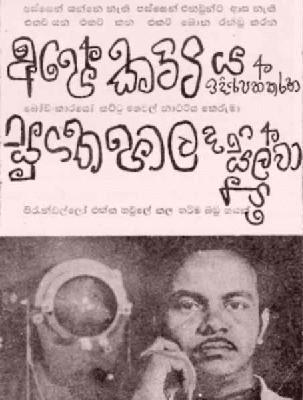
අභිනව චින්තන විප්ලවයකට මුල පිරු හේ නව කල්පනා සිහින දැකුම් සමාජය හමුවේ කියා පෑවේ ය. 1972 වසරේ දී “අනේ දෙව්දත් නොදුටි මොක්පුර” නමැති කාව්‍ය සංග්‍රහය රචනා කරමින් සුගත් ස්වකීය බුද්ධිමය අරගලය මොනොවට පැහැදිලි කළේ ය. නිදසුනක් ලෙස එකවි සපුවෙහි නිමැවුමක් පහත හකුලා දක්වමි.

මොළ නෙලූ එකෙක්

රාක්ක මොළවලින් පුරවා

පොත් ගුලක හිර වී

කාවන් සමඟ සටනක

මොළ ගසා කෑ එකෙක්

සේප්පු කාසිවලින් පුරවා

රිදී යතුරු කැරැල්ල

විල්ලු ද කොට්ටය යට සඟවා

නොමැරෙන බේත් සොයන සටනක

(අනේ දෙව්දත් නොදුටි මොක්පුර - 17 පිට)

පූර්වෝක්ත කාව්‍ය නිමැවුමෙන් එදා සුගත් පැවැසූ පරිදි අද තිබෙනුයේ ද මොළ ගසා කන්නන් ගෙන් ගහන කුණු වී ගිය සමාජයකි. මේ සමාජයේ මොළ සූරා කන්නන් මිසක මොළ නෙලන්නන් දක්නට නැත. ජීවිතයේ රිද්මය සිය කාව්‍ය නිමැවුම්වලින් විමැසූ සුගත් පුද්ගලයා ගේ ධී සවිය පිළිබඳ අනවරතයෙන් ම කතා කෙළේ ය. ගතානුගතික වැඩවසම් වහල් චින්තනයෙන් වියුක්ත වී සිය සාහිත්‍ය කලාංගයන් සමාජ සංවාදය සමඟ සම්මිශ්‍රණය කිරීමට ඔහු ගත් ප්‍රයත්නය සුළු පටු නො වේ.

නාට්‍ය, නවකතාව, කවිය වැනි නිර්මාණ මාර්ගයන්හි මෙන් ම විචාර මාර්ගයෙහි ද සුගතපාල ද සිල්වා නායකත්වය දී තිබෙනුයේ මෙකී බුද්ධිමය අරගලයට ය.


ජීවිතය

කෙළ පිඩකි

අලුයම ලූ

මේ කෙළ පිඩ

බුද්ධියේ

අනුදක්නයෙන් අල්ලා

ජීවිතේ රෝග නිධානය සොයව්!

(අනේ දෙව්දත් නොදුටු මොක්පුර - 14 පිට)

සමාජ විඥානය ග්‍රහණය කරගත් විශිෂ්ට කලාකරුවන් අප අතර සිටිනුයේ අතළොස්සකි. එයිනුත් සුගතපාල ද සිල්වා සියුම් විචක්ෂණශීලිත්වයෙන් හෙබි සුවිශිෂ්ට කලාකරුවකු බව මම කියමි. ශෛලීගත සම්ප්‍රදායෙහි සිර වූ සිංහල නාට්‍ය කලාව ඉන් පරාරෝපිත කොට ඊට තවත් රූපයක් තිබෙන බව තිරසර ලෙස භාවිතයෙන් ම සාක්ෂාත් කළ නාට්‍යවේදියා සුගතපාල ද සිල්වා යැයි කීම අතිශයෝක්තියක් නො වේ.

සිංහල නාට්‍ය කලාව සුපුෂ්පිත කොට සුපෝෂණය කිරීම සඳහා බටහිර සම්භාව්‍ය නාට්‍ය කලාව සේවනය කළ සුගත් සිය අසමසම කලා ප්‍රතිභාවෙන් ද සියුම් ගැඹුරු ප්‍රඥාවෙන් ද උතුම් මනුෂ්‍ය ධර්මයෙන් ද පොහොණ වූ අප්‍රමාණ කලාකරුවෙකි. ඔහු ගේ විස්මිත කලා මෙහෙවර සිංහල නාට්‍ය, නවකතාව, කවිය මතු නොව ගුවන් විදුලිය ආදි ක්ෂේත්‍ර ගණනාවක් ඔස්සේ විහිදී ගිය මහා ප්‍රවාහයකි.

ගුවන් විදුලියෙහි සුගත් කළ විප්ලවයක් ලෙස ගුවන් විදුලි නාට්‍ය හා කෙටිකතාව ප්‍රමුඛ තන්හී ලා ගිණිය හැකි ය. කෙටිකතාව වූ කලී වචන පෙළකින් ඔබ්බට ගිය රස පද්ධතියක් බව ඔහු භාවිතයෙන් ම පෙන්නා දුන්නේ ය. ජාතක පොත, සම්භාව්‍ය සාහිත්‍ය මෙන් ම මාක්ස්වාදය ද පිළිබඳ චීරපරිචිත අවබෝධයකින් යුතු දුර්ලභ ප්‍රාඥයකු ලෙස ද ඔහු සිය රංග කලා හා සාහිත්‍ය භූමිකාව තුළ කැපී පෙනේ.

සුගත් ගේ නාට්‍ය නිෂ්පාදනය සහ අධ්‍යක්ෂණය අරබයා වූ පුළුල් දැනුම්වත්භාවය සහ අවබෝධය ඔහු විසින් 1988 පළ කළ සොඳුරු “ආඥාදායකයා හෙවත් නාට්‍ය නිෂ්පාදක” නමැති කෘතියෙන් වටහා ගත හැකි ය.

ඒ හැරුණු විට “මරාසාද්” වැනි දැවැන්ත පරිවර්තන නාට්‍ය නිෂ්පාදන හරහාත් සුගත් ගේ නාට්‍ය සම්පාදන කලාව විද්‍යමාන වේ. පීටර් වයිස් ගේ (Peter Weiss) මරා - සාද් (Marat - Sadc) නාට්‍ය දුෂ්කර පිටපතකි. එහෙත් නව වාමවාදී කතිකාව නිරූපණය කිරීමට ඔහු මේ දැවැන්ත නාට්‍ය කෘතිය පරිවර්තනය කොට වේදිකාගත කෙළේ ය.

සුගතපාල ද සිල්වා ගේ විශිෂ්ටත ම ස්වත්‍රන්ත්‍ර නාට්‍ය “දුන්න දුනු ගමුවේ” නාට්‍ය යැයි කීවොත් එය අතිශයෝක්තියක් නො වේ. දුන්න දුනු ගමුවේ පුරා දශකයක් පුරා මෙරට නගර, උප නගර, ගම් නියංගම් සිසාරා ගමන් කළ දැවැන්ත නාට්‍යයකි.

ගැමි රඟ මඬලින් ඔබ්බට ගිය නව නාට්‍ය සම්ප්‍රදායක් සඳහා පුරෝගාමී වූ “දුන්න දුනු ගමුවේ” සමාජ සංවාදය කැටුව අවතීර්ණ වූ මහාර්ඝ නිර්මාණයකි. කම්කරු සමිති නායකයකු ස්වකිය පන්ති සටන හා අසරණ වූ සිය බිරිඳ - දරුවා අතර මැදි වී කරන සන්ත්‍රාසජනක විඳවිල්ල මෙන් ම ලාංකේය කාන්තාවන් ගේ කැපවීම පිළිබඳ පණිවිඩය ද රැගෙන ආ මේ නාට්‍ය එවකට සමාජයේ මතු වූ කැකෑරිල්ල ද සුවිශද කෙළේ ය.

සුගතපාල ද සිල්වා ස්වකීය කලා නිමැවුම් කෙරෙන් ලාංකේය කාන්තාවන් ගේ අධ්‍යාත්මය විනිවිද දුටු මාහැඟි කලාකරුවෙකි. ඔහු විසින් නිෂ්පාදනය කළ “හිත හොඳ අම්මණ්ඩි” නමැති නාට්‍යයේ එන බර්ටෝල් බ්‍රෙෂ්ටි ගේ කාව්‍ය නිමැවුම පූර්වෝක්ත කරුණු කාරණා සනාථ කරන ආකාරය බලන්න.


ඉවක් කෝ? තැනක් කෝ?

දස්ස මිනිහට රටේ

වාසනා ගුණ සිඳුණු

පිදිය යුත්තන් නොදත්

දස්කම් විස්කම් ඔප්පු කරන්නට

අනුබල අනුහස තල්ලුව ඕනෑ

දස්කම් විස්කම් ඔප්පු කරන්නට

විලක්කු පාලිය රඟන්න ඕනෑ

(අනේ දෙව්දත් නොදුටු මොක්පුර - 20 පිට)

නිස්සන්, සුදුස්සන් නො ව පුස්සන්, ගැත්තන් රජයන සමාජයක දක්ෂයනට වැඩ කිරීමට අවස්ථාවක් කොහින් ද? දක්ෂයාට අද සමාජයේ ඉඩක් නැත. ඔහුට කිසියම් ආස්ථානයකට අවතීර්ණ වීමට නම් දූෂණයෙන්, වංචාවෙන් ජීවත් වන බඩගෝස්තරවාදී අමනෝඥයන් ගේ ඕනෑ එපා කම් ඉටු කළ යුතු ය. කාන්තාවකට නම් ඊටත් වඩා බොහෝ දේ පරිත්‍යාග කිරීමට සිදු ;ව්.

උඩු යටිකුරු වී ගිය සමාජය දෙසට සුගත් ගේ විමංසානාක්ෂිය යොමු වන ආකාරය කෙතරම් නම් අගනේ ද? සුගත් ගේ නාට්‍ය මෙන් ම කවිය ද මනුෂ්‍යත්වයේ පැහැයත්, සමාජයේ රිද්මයත් මුසු කොට සුපුෂ්පිත කළ පුෂ්පයක් බඳු ය. සංවේදී මනුෂ්‍ය හදවතට අනවරතයෙන් ම පෙම් බැඳි සුගත් මිනිස්කම අලුක්කාලක්වත් නැති ජරා ජීර්ණ සමාජ සංස්ථාවට අතුල් පහරක් එල්ල කරන තවත් අපූරු කාව්‍ය නිමැවුමකි මේ.

අහම්බෙන් මෙන්

විශ්වයේ කොහේදෝ තැනක

මොකක්දෝ පෙරළියක් වූ

අමාවක පෝ දාක

කිරි බැබළෙන හඳ එළියේ

ඇහින්දෙමි මම

උණුවෙන හදවතක්

“කාටද ඕනෑ උණුවෙන හදවතක්

කවුද ආශා උණුවෙන හදවතක්”

කෑ ගෑවෙමි මම

හදවත් නැත්තෝ

නහුතක් දෙනා

“එපා එපා” මුර දෙති

අහක බලාගෙන

අනේ දෙව්දත් නොදුටු මොක්පුර - 40 පිට

අද්‍යතන සමාජයේ හදවත් ගැනීම මෙන් ම පිදීම ද ගනුදෙනුවකි. පුද්ගලයා මූලික කර ගත් ආත්මාර්ථකාමී මිනිසුන් රජයන සමාජයක හදවත් ඇත්තෝ කවුරුන් ද? උණු වෙන හදවතකින් මේ ගොරතර සමාජයට කුමන නම් පලක් ද? මේ අරාජික සමාජයට අවැසි වනුයේ රළු පරළු ගොරහැඬි හදවත් ම පමණි.

එහෙත් හදවත් නැති මිනිසුන් අතරේ වුව ද සුගත් හදවතින් ම අපූරු සිහිනයක් දකියි. ඔහු ස්වකීය කලා නිමැවුම් කෙරෙන් විමැසුම් කෙළේ ද එකී මනරම් ජීවිතය යි. මෙනයින් ජීවිතයේ යථාර්ථය සොයන පුද්ගලයන්ට සුගත් ගේ මාහැඟි කලා නිමැවුම් සත්‍යයේ කැටපතක් බඳු ය.

Tuesday, 12 January 2010

'Makkal Kalari' (Jana Karaliya) - a theatre bridge between Sinhala and Tamil people

Author: Anjana Gamage

Source: Daily News

DRAMA: "We will not directly speak on peace. But the entire audience who view our dramas will realise that it as a collective work by both Sinhala and Tamil theatre loving groups.

For example, Tamil artistes would play roles in Sinhala dramas and Sinhala artistes would perform in Tamil dramas.

The presentation of our theatre production, would provide some kind of a signal to the inner thoughts of the viewers in an exemplary manner", points out veteran small screen and stage drama director Parakrama Niriella.


Parakrama Niriella

"Jana Karaliya" or " Makkal Kalari" in Tamil means theatre of the people. "Jana Karaliya", a drama and theatre activities group, which focuses their programmes throughout the country, was a brain concept by Niriella two years ago.

Speaking on the object of "Jana Karaliya", Niriella said: "Jana Karaliya" was launched in July 2004, just two years ago. But I had immense experience in handling theatre production with Haththotuwagama in 1970s when we were doing the production of "Sitha and Rama".

However I had a difficulty with the term of 'performing space' in stage dramas. We were used to call the stage in Sinhalese as "Ranga Madala" or "Karaliya" or " Vedikawa".

But in Europe, although they called it "Stage" when it comes to use, it means a lot. The stage dramas should go to the ordinary people. We should offer it in more attractive way rather than it was".

Describing the activities of the mobile theatre group of "Jana Karaliya", Niriella said that the unique of its mobile group is that it owned a huge tent that can accommodate thousands of theatre lovers at once.

"It is called new arena type theatre. The mobile theatre group in Colombo visit the area they chose and put up the tent there. From that point they start their theatre activities. The very first mobile theatre came to live from Anuradhapura.

Another one was held in Trincomalee. The mobile theatre is different from the applied theatre. We have a group consisting of Sinhala and Tamil youth of 25 members. The dramas produced by these members will be shown from time to time at the tent.

Apart from the performance, we will also hold drama workshop for youth and series of workshop and practical sessions for Sinhala and Tamil teachers in the area with the intention of promoting their knowledge on theatre which will assist them in teaching Drama and Theatre in schools".


The huge tent

This time "Jana Karaliya" has launched its Drama and Theatre programme in Puttalam District. "Jana Karaliya" Mobile Theatre Group arrived Puttalam in May and installed the Mobile Theatre at St. Mary's Tamil Maha Vidyalaya ground.

They will stay there till mid of July, engaging with Drama and Theatre activities. They have already started conducting Drama and Theatre appreciation programmes at Puttalam, Mahakumbukkadawala, Karuwalagaswewa, Anamaduwa, Vanathavilluwa, Serakkusiya, Kalpitiya and Nawagaththegama with the assistance of the Provincial Secretaries of those areas.

They will start Drama and Theatre appreciation programmes and workshops for school students and teachers after A/L examinations and holidays.

"Jana Karaliya Drama Festival", the most attractive item of their activity in the Jana Karaliya Mobile theatre started from June 23 and continue till July 3.


Mobile theatre activists

Jana Karaliya Sinhala and Tamil Drama production, "Charandas", "Seethambarapata", "Andaramal", "Devlowagamana", "Charandas Kallan", "Mayappattadai", "Erukkalam Poo", "Dewaloha Payanam" and Children's Plays of Saman Pushpakumara ("Ahankara Kiribabi and "Dangayo Ne") and Sumith Samarasinghe ("Soru Evilla") also included in the list of Drama Festival scheduled.

All the "Jana Karaliya" plays are collective efforts of the Janakaraliya Mobile theatre group that consists of Sinhala & Tamil youth.

Palitha Abeylal, Jayantha Kumara Muthuthanthri, Suneth Shanthapriya, Sokkalingam Krishanthan, Chaminda Prasad, Manjula Ranasinghe, Nishantha Kularatna, Sumudu Mallawarachchi, Thyagaraja Sivanesan, Muniyandi Kalidas, Verni Theresa, Ajanthan Shanthakumar, Arosha Tharanganee, Sineth Devinda, Dinesh Swarna Sri Livera, Sam Paul, Malithi Kumari, Praneeth Jeewantha, Chinthaka Kodithuwakku, Rasaiya Lohanadan, Selvaraj Leelawathi, J. Sr Devi and B. Radhika are performing artistes in all these plays.

H.A. Perera has composed music with the assistance of Sumudu Mallawarachchi and Tharindu Gamage. Palitha Abeylal is the sound controller, Ajanthan Shanthikumar is the lighting technician and Chaminda Prasad is the Make up Artist. Ravinda Mapitigama assists in choreographing and direction.

Dilip Rohana is doing the management while Parakrama Niriella and H.A. Perera leads the entire Jana Karaliya Programme.